US Judge Blocks Trump’s $100,000 Fee for H-1B Visas


 June 10, 2026 11:17 am
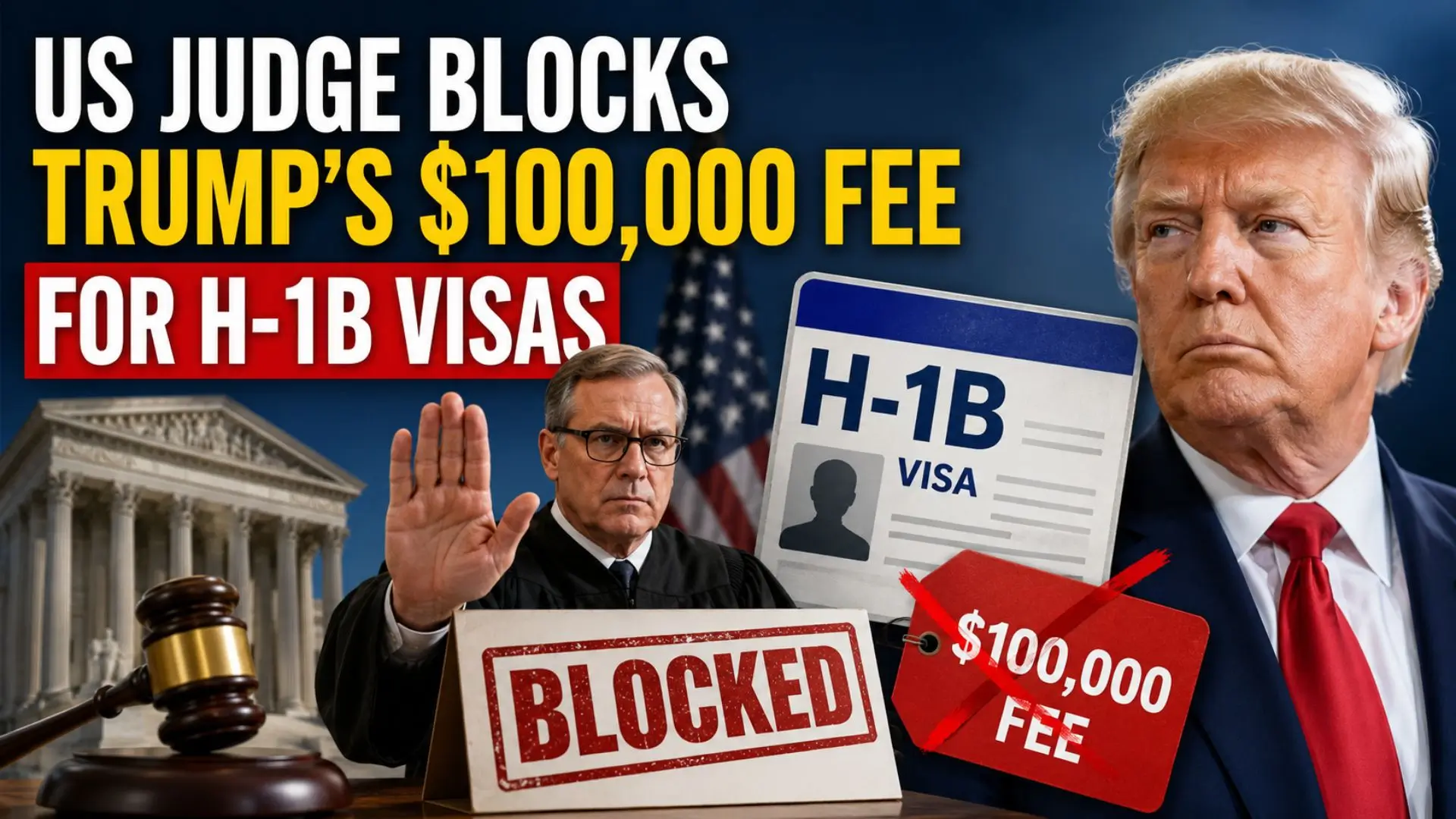
US Judge Blocks Trump’s $100,000 Fee for H-1B Visas. A federal judge has blocked a major immigration policy move by US President Donald Trump that would have added a $100,000 annual fee to H-1B skilled worker visas. The ruling is a significant legal setback for the Trump administration’s efforts to restrict foreign worker programs in the United States.
What Is the H-1B Visa?
The H-1B visa is a non-immigrant work visa that allows American companies to hire foreign workers with specialised skills. It is commonly used to recruit scientists, engineers, software developers, and computer programmers from abroad.
H-1B visa holders can initially work in the US for three years, with the option to extend their stay up to six years. The program is popular among technology companies, universities, hospitals, and research institutions that depend on international talent.
Each year, the US government issues up to 65,000 new H-1B visas, with an additional 20,000 available for applicants who hold advanced degrees from US universities.
What Did Trump’s Policy Propose?
In September 2025, President Trump signed an order adding a $100,000 annual fee to H-1B visa applications. This was a dramatic increase compared to the standard administrative and processing costs of a few thousand dollars that employers normally pay.
The Trump administration defended the policy by arguing that the president had the authority to impose the charge as part of broader immigration enforcement efforts and to limit certain categories of foreign workers entering the United States.
Why Did a Judge Block It?
Federal Judge Leo Sorokin ruled that the $100,000 charge was not a legitimate immigration fee — it was effectively a tax. Under the US Constitution, only the US Congress has the power to create new taxes. Because the executive branch bypassed Congress entirely, the fee was deemed illegal.
Judge Sorokin also made clear that the government cannot simply relabel a tax as a “fee” or “penalty” to avoid the need for congressional approval. The court rejected the White House’s legal argument that the charge fell within presidential authority over immigration enforcement.
Who Challenged the Policy?
The legal challenge was brought by 20 state attorneys general, all Democrats. They argued that the $100,000 fee would cause serious harm to public institutions — particularly universities, public schools, and hospitals that rely on qualified international staff to fill critical roles.
These institutions often depend on H-1B visa holders to fill positions in healthcare, education, and scientific research where there are shortages of domestic workers.
How Much Impact Did the Fee Have?
Despite being announced, the fee had very limited real-world effect before it was halted. Court records revealed that only around 85 employers had actually paid the $100,000 charge before the legal challenge effectively froze the policy.
The fee was widely viewed as a major barrier to hiring, making it economically unviable for many employers — especially smaller organisations and public institutions — to sponsor foreign workers through the H-1B program.
What Happens Next?
The Trump administration may appeal the ruling or seek another legal route to limit the H-1B program. However, the court’s decision makes it clear that significant changes to visa fees must go through Congress, not executive orders alone.
The ruling is seen as a victory for employers, universities, and immigrant advocacy groups who argued that the fee was an attempt to shut down legal, skills-based immigration through the back door.
Key Takeaways
- A US federal judge ruled Trump’s $100,000 H-1B visa fee was an illegal tax.
- Only Congress, not the president, can create new taxes under US law.
- The H-1B program allows up to 85,000 skilled foreign workers into the US each year.
- Twenty Democratic state attorneys general filed the successful legal challenge.
- Only about 85 employers paid the fee before it was blocked by the courts.
The decision underscores the constitutional limits of executive power in US immigration policy and highlights the ongoing legal battles over how the Trump administration has sought to reshape legal immigration in America.
Najeena Najeeb
I am Najeena Najeeb, a travel information writer with experience in Qatar visa processes and immigration guides. I help users check visa status, understand requirements, and avoid common mistakes.