Qatar Freelance Visa: Requirements, Application Process, Costs & Legal Ways to Work


 May 10, 2026 10:08 am
A Qatar freelance visa allows skilled individuals to work independently without joining a full-time company. It is a great option for people who want flexibility and control over their work. Many professionals like designers, writers, and consultants choose this path. With this visa, you can offer services legally in Qatar and earn income from different clients. Understanding the process, requirements, and benefits is very important before applying, so you can avoid problems and start your freelance journey with confidence.
Understanding the So-Called “Freelance Visa” in Qatar
Here’s where most people get confused and the confusion is understandable given how loosely the term gets used across forums and recruitment platforms.
What people commonly call a Qatar freelance visa is, in legal terms, a standard employment visa issued through a Qatari sponsor or company. The mechanics work like this: a local citizen or a company owned by a local citizen agrees to sponsor your residency, but unlike a genuine employment arrangement, this sponsor does not provide actual work, a salary, or any professional obligation.
You pay them typically a lump sum between QR 5,000 and QR 10,000 upfront, followed by a monthly fee ranging from QR 250 to QR 500 and in exchange, they facilitate your residency permit, also known as the Qatar ID or QID.
Under this arrangement, a labour agreement is signed during visa issuance, and the sponsor is technically required to pay you through a WPS (Wage Protection System) bank account. In reality, neither party honours this clause genuinely. You work for other employers unofficially, your sponsor collects fees, and everyone quietly operates in a legal grey area that Qatar’s Ministry of Labour is actively cracking down on.
Why this is dangerous:
The honest framing: this is not a freelance visa. It is an unofficial sponsorship arrangement that exposes you to severe penalties while offering zero legal safeguards.
What is a Freelance Visa?
Before diving deeper into Qatar’s specific landscape, it’s worth anchoring the concept — because a legitimate freelance visa, when properly structured, is a powerful instrument for independent professionals.
A freelance visa is a special type of permit that gives skilled workers, creatives, and professionals the legal authorization to work independently in a foreign country without being tied to a single employer. The fundamental difference from a general work visa is the absence of employer constraints — you’re not locked into one company’s payroll, one industry’s rules, or one sponsor’s goodwill.
| Feature | General Work Visa | Freelance Visa |
|---|---|---|
| Tied to single employer | Yes | No |
| Multiple clients allowed | No | Yes |
| Employer sponsorship required | Yes | Not always |
| Work flexibility | Limited | High |
| Ideal for | Employees | Freelancers, entrepreneurs, digital nomads |
Under a legitimate freelance visa, a graphic designer can legally serve multiple clients, an IT consultant can run parallel contracts, and a marketing expert can manage campaigns across firms — all under one permit, within a clear regulatory framework. This is the freedom and flexibility that self-employed professionals seek when exploring markets like Qatar.
What is a Qatar Freelance Visa?
Qatar’s relationship with independent work is evolving — slowly, but meaningfully.
The two programs most relevant to freelancers and self-employed professionals are the Mustaqel Visa and the Azad Visa. Both are officially sanctioned under Qatar’s labour and immigration regulations, which immediately distinguishes them from the unofficial arrangements described above.
| Program | Type | Duration | Key Benefit |
|---|---|---|---|
| Mustaqel Visa | Long-term residency | Up to 5 years (renewable) | Family sponsorship, bank accounts, government services |
| Azad Visa | Short-term freelance | Project-based | Specific contracts or short engagements |
| QFZA / QFC Registration | Free zone authorization | Varies | No private employer sponsor required |
The Mustaqel Visa is the more robust of the two it allows skilled professionals to live in Qatar long-term, operate independently, access government services, open bank accounts, and even sponsor family members. The Azad Visa targets professionals who want to engage in short-term freelance work tied to specific projects or contracts.
What makes both programs significant is their legal recognition. Qatar Free Zones Authority (QFZA) and Qatar Financial Centre (QFC) also serve as approved platforms through which certain independent professionals can register and obtain legal work authorization without relying on a private employer sponsor.
The Mustaqel program has now opened for freelancers with a five-year residency plan, signalling Qatar’s intent to compete with the UAE’s Talent Pass in attracting global talent in digital, creative, and professional fields. Still, unlike neighbouring Dubai — which officially launched its freelance visa in 2022 — Qatar has not yet reached full parity in terms of a universally accessible, officially labelled “freelance visa.” But the infrastructure is being built, and understanding it now gives independent professionals a genuine advantage.
Eligibility Criteria for Qatar Freelance Visa
Not everyone qualifies — and that’s a feature of the program, not a flaw. Qatar’s freelance visa pathways are designed for skilled, financially stable, professionally credible individuals.
Age & Nationality:
Professional Requirements:
| Field | Priority Level |
|---|---|
| IT & software development | High |
| Digital marketing | High |
| Creative design & media | High |
| Engineering & consulting | High |
| Education & training | Medium |
| Finance & accounting | Medium |
Additional Eligibility Conditions:
How to Apply for a Qatar Freelance Visa
Applying correctly the first time matters more than people realize. I’ve seen skilled professionals lose months — and significant money — because they relied on agents who skipped steps or submitted incomplete documentation. Here is the process as it actually works.
| Visa Type | Starting Cost | Notes |
|---|---|---|
| Azad Visa | QAR 5,000 | Short-term, lower cost |
| Mustaqel Visa | Higher | Long-term residency benefits |
| General processing | From QAR 1,000 | Varies by pathway |
| QVC medical test | QAR 200–300 | Mandatory, non-refundable |
| Visa Type | Validity | Renewal Requirements |
|---|---|---|
| Azad Visa | 1–2 years | Updated health insurance, sponsor reconfirmation |
| Mustaqel Visa | Up to 5 years | Proof of ongoing freelance activity, evidence of income |
Missing renewal deadlines triggers fines and potential loss of work authorization.
Documents Required for Qatar Freelance Visa
Getting your paperwork right eliminates the single biggest source of delay in this process.
| Document | Details |
|---|---|
| Valid passport | Minimum six months remaining validity; previous Qatari residence documents if applicable |
| Educational certificates | Degrees, diplomas, or professional certifications; foreign certificates require apostille or notarization |
| Professional portfolio or references | Client testimonials, letters of reference, or documented project samples |
| Financial documents | Bank statements, proof of income, or client contracts showing financial stability |
| Health insurance proof | Valid coverage for medical expenses in Qatar including emergencies |
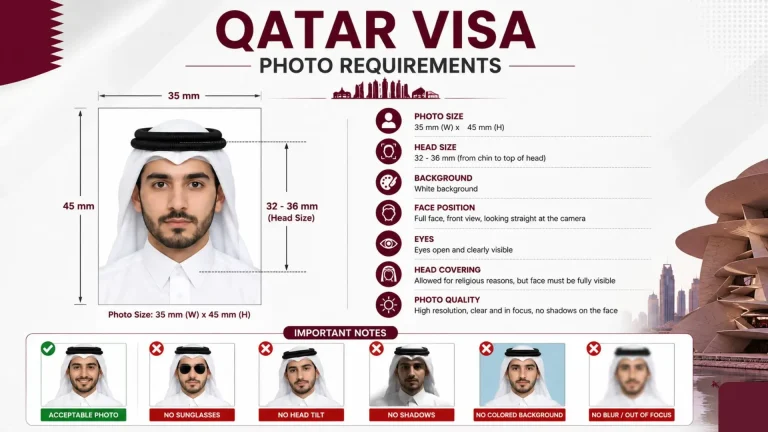
| Passport-size photographs | Two recent passport-sized photographs |
| Visa application form | Completed and accurate |
| Police clearance / good conduct certificate | May require authentication if applying from outside Qatar |
| Medical examination report | From a government-approved facility, required for the residence permit process |
| No Objection Certificate (NOC) | Required if currently employed in Qatar |
Costs and Fees of Qatar Freelance Visa
Understanding the full cost picture before you begin prevents unpleasant surprises mid-process.
Without a Qatar ID:
| Fee Component | Estimated Cost (QAR) |
|---|---|
| Azad Visa (without QID) | From QAR 5,000 |
| Mustaqel Visa | Higher (extended residency benefits) |
| QVC processing fee | QAR 200–300 |
| QVC medical test | QAR 200–300 (non-refundable) |
| Biometric registration | Included in processing |
With an Existing Qatar ID: Applicants in this category often pay reduced fees — potentially several thousand QAR less — since part of the administrative groundwork is already completed. Verify the exact figure directly with MOI or your sponsor.
Additional Costs to Budget For:
International Comparison:
| Country / Visa Type | Fee |
|---|---|
| Qatar business / investor visa (90-day) | QAR 7,500 – QAR 18,500 |
| Germany self-employed / freelance national visa | €75 (fixed) |
| Qatar QVC processing fee | QAR 200–300 |
Budget carefully, keep every receipt, and never make a payment without a documented record.
Benefits of Holding a Qatar Freelance Visa
Working legally in Qatar as an independent professional — rather than through an unofficial sponsorship arrangement — changes your experience in ways that go well beyond compliance.
Legal Aspects and Risks
The legal framework governing freelance work in Qatar is precise, and navigating it incorrectly carries consequences that are neither minor nor reversible.
Is the Freelance Visa Legal? When pursued through official channels — the Mustaqel Visa, Azad Visa, or QFC/QFZA-registered pathways — freelancing in Qatar is fully legal. Working without proper authorization or under unofficial arrangements is illegal and triggers severe penalties.
Labour Law Overview — Article 15 The governing text is Article 15 of Qatar Labour Law, Law No. 4 of 2009:
“No natural or juristic person may allow expatriates recruited as employees to work for any other entities, nor may they employ staff who is not thus sponsored. The competent authority may, exceptionally, allow the sponsor to second its expatriate employees to another employer for no more than six months, with the arrangement renewable for a similar period.”
Penalties for Illegal Work:
| Party | Consequences |
|---|---|
| Employee | Imprisonment, fines, deportation, blacklisting |
| Employer | Fines, legal ramifications, operational restrictions |
| Sponsor | Fines, loss of sponsorship rights, potential prosecution |
Risks for Sponsors in Unofficial Arrangements: Sponsors engaged in unofficial visa sales face their own legal exposure — fines, legal ramifications, and revocation of sponsorship rights. When authorities close in, they close their company and open another under a different name, leaving visa holders stranded without legal status, no QID renewal, no family access, and no clean way to exit.
Challenges Freelance Visa Holders Face
Even with a legitimate freelance visa in hand, independent professionals in Qatar encounter challenges worth understanding before you arrive.
Problems with Unofficial Arrangements
The pull toward unofficial visa arrangements is real — they’re faster, cheaper upfront, and easier to access. But the documented fallout includes:
Financial Instability and Cash Flow
Freelancers deal with unpredictable income by nature. Without the structure of a company payroll, managing cash flow and sustaining living expenses in Qatar — where costs of living are significant — is genuinely challenging. This is precisely why proof of financial stability is required during the application process.
Visa Renewal and QID Complications
Sponsor-Related Problems
Legal Alternatives for Freelancers in Qatar
If the official Mustaqel or Azad pathways aren’t the right fit, Qatar offers other legally recognized routes for independent professionals.
Working Through Licensed Labour Supply Companies:
Secondment Agreements:
Mustaqel and Azad Visa Pathways:
| Pathway | Duration | Best For |
|---|---|---|
| Mustaqel Visa | Up to 5 years (renewable) | Long-term independent work, family sponsorship |
| Azad Visa | Project-based / short-term | Specific contracts, shorter engagements |
| Labour supply company | Ongoing | Multi-client flexibility with legal employment structure |
| Secondment | Up to 6 months (renewable) | International professionals on Qatari assignments |
Tips for a Successful Qatar Freelance Visa Application
Having watched applications succeed and fail across different visa types, the patterns are consistent enough to share directly.
Is There a Freelance Visa in Qatar?
The short answer: not as a standalone, universally accessible category — but the infrastructure for legitimate independent work is more developed than most people realize.
Qatar does not issue a visa labelled “freelance visa” the way Germany issues a residence permit for self-employed freelancers or the UAE rolled out its Talent Pass in 2022. Under Qatar’s kafala system, every foreign worker must have a registered employer sponsor, and working without one is considered illegal.
However, legitimate pathways exist:
The bottom line: a formal freelance visa in Qatar does not yet exist in the same form as Germany or UAE. But the Mustaqel Visa, labour supply company sponsorship, and QFC/QFZA pathways provide legally sound alternatives for professionals who approach the system correctly.
Who Can Freelance in Qatar?
Freelancing in Qatar is generally accessible to skilled professionals who bring specialized, demonstrable expertise to the market.
Eligible Professional Categories:
Both locals and foreign nationals can apply, provided they meet all legal and eligibility requirements. Foreign nationals already employed in Qatar may need a No Objection Certificate (NOC) from their current employer before engaging in additional freelance work — a requirement that applies regardless of nationality.
Baseline requirements across all categories:
How to Legally Freelance in Qatar?
Three routes offer genuine legal standing for independent professionals operating in Qatar.
Mustaqel Visa The most direct pathway for talented individuals and entrepreneurs who can demonstrate eligibility. Grants residence and work authorization independently of a traditional employer sponsor — the closest equivalent Qatar currently offers to a standalone freelance permit.
Registered Labour Supply Companies Licensed to sponsor foreign workers and assign them to specific client projects across different businesses. Workers remain legally employed through the supply company, which covers salary and welfare obligations, while effectively working across multiple clients.
Secondment Agreements Professionals employed by companies outside Qatar can be temporarily assigned to a Qatari entity with approvals from their original employer and the Ministry of Labour. Full compliance with Qatari labour laws is maintained throughout.
| Route | Legal Standing | Best For |
|---|---|---|
| Mustaqel Visa | Fully official | Independent professionals, entrepreneurs |
| Labour supply company | Fully legal | Multi-client flexibility |
| Secondment | Fully legal | International professionals on assignment |
Qatar Labor Law Provisions
The legal architecture governing employment and sponsorship in Qatar centres on Article 15 of Qatar Labour Law, Law No. 4 of 2009.
“No natural or juristic person shall permit expatriates, recruited as employees of the person, to perform work, or to employ a person who is not so sponsored. The competent authority may allow the sponsor to second its expatriate employees to another sponsor for a period of not more than six months, and said period may be renewed for a similar period.”
What this means in practice:
Strict monitoring and regulation by Ministry of Labour enforcement mechanisms mean that violations are actively pursued — not theoretical risks. Correct documentation is essential, and detailed guidance is available on the official Ministry of Labour website.
Penalties for Illegal Work
Qatar’s enforcement of labour law is neither lenient nor inconsistent. The penalties apply to all parties involved.
| Party | Penalty |
|---|---|
| Employee | Fines, imprisonment, deportation, blacklisting |
| Employer | Fines, legal ramifications, operational restrictions |
| Sponsor | Fines, loss of sponsorship rights, potential prosecution |
Enforcement mechanisms include:
The consequences are neither rare nor mild — they are applied as a deliberate deterrent. Adhere to Qatar’s labour laws, maintain proper compliance, and ensure every work arrangement is backed by correct documentation. The risks are documented, enforceable, and life-altering.
Legal Ways to Work for Another Employer
Three recognized structures exist for professionals who want to legally expand their work beyond a single employer in Qatar.
Qatar Work Visa
A standard visa sponsored by a Qatari employer, linking you to a specific company. The most common legal method for foreign workers to establish a stable, financially structured stay in Qatar. Costs vary by sector and employer, with different fee structures for various nationalities including Indian and Pakistani professionals.
Secondment
| Requirement | Detail |
|---|---|
| Agreement between companies | Formal written arrangement required |
| Ministry of Labour consent | Mandatory approval |
| Maximum duration | Six months |
| Renewable | Yes, for a similar period |
Labour Supply Companies
In-Demand Skills in Qatar
Qatar’s economy tells a clear story about where independent professionals have the strongest entry points.
| Sector | Demand Level | Notes |
|---|---|---|
| IT & software development | Very High | Digital transformation, corporate IT infrastructure scaling rapidly |
| Digital marketing | Very High | Accelerating as Qatari businesses move online |
| Civil engineering & infrastructure | High | Ongoing construction and urban development programs |
| Petroleum engineering | High | Strategically important for oil and gas sector |
| Healthcare (doctors, nurses, pharmacists) | High | Active recruitment across health services |
| Data analysis | High | Finance and telecom sectors prioritizing data-driven decisions |
| Creative & media services | Medium–High | Growing demand for content creators and designers |
| Education & training | Medium | Consistent demand across institutions |
| Finance, accounting & consulting | Medium | Steady across international and local firms |
Understanding which of these fields aligns with your skills isn’t just useful for an application — it directly affects your approval probability, earning potential, and ability to build a sustainable independent career in Qatar.
QVC Medical Test for Qatar Freelance Visa
The QVC medical test is not a formality. It is a mandatory, non-negotiable component of the Qatar freelance visa and residence permit process — and failing it means visa rejection.
Tests Included:
| Test | Purpose |
|---|---|
| Full physical examination | Complete assessment of overall health |
| Blood tests | Screening for HIV, Hepatitis B, and Hepatitis C |
| Chest X-ray | TB screening and respiratory condition checks |
| Biometric data capture | Fingerprints and photograph for identity verification |
| General health assessment | Infectious and chronic disease screening |
Important Conditions:
What to bring to your appointment:
How to Check QVC Qatar Freelance Visa Status
Tracking your application status through official platforms is straightforward — and relying on agents for updates is unnecessary and inadvisable.
Method 1: MOI Qatar Portal
Method 2: QVC Website
Method 3: Metrash App
For final approval confirmation, always rely on MOI status — not your agent’s word. All three platforms sync medical, biometric, and contract status directly.
NOTE
Official Freelance and Self-Sponsorship Options
Qatar’s most structured freelance and self-sponsorship pathways represent the legitimate future of independent work in the country.
Mustaqel Visa
Residence Permit for Talented Individuals The flagship self-sponsorship program for skilled professionals — allows freelancers, consultants, remote workers, and self-employed professionals to live and work in Qatar for up to five years, with renewal, without being tied to a traditional employer.
Benefits include
Talent Category Eligibility
| Requirement | Detail |
|---|---|
| Endorsement | From a recognized Qatari government authority |
| Employment | Valid job offer or employment contract, OR |
| Financial stability | Minimum QAR 36,500 in available funds |
Entrepreneur Category Eligibility
| Requirement | Detail |
|---|---|
| Business plan | Approved by relevant Qatari authorities |
| Minimum investment | QAR 250,000 |
Both categories represent Qatar’s deliberate effort to attract global talent in digital, creative, IT, media, marketing, design, and professional fields — positioning the country as a competitive destination for independent professionals in the Gulf.
Qatar Freelance Visa Reality and Global Alternatives
Qatar’s freelance visa reality is best understood in contrast with what other countries have built — and where Qatar is headed relative to those benchmarks.
There is no official Qatar Freelance Visa that legally allows individuals to work independently the way Germany’s self-employed residence permit or the UAE’s Talent Pass does. Under Qatari labor law, every worker must have a registered employer sponsor, and working without one is illegal.
Global Freelance Visa Comparison:
| Country | Program | Key Features |
|---|---|---|
| UAE | Talent Pass (2022) | For freelancers and self-employed professionals within UAE |
| Germany | Self-employed residence permit | Artists, IT experts, consultants; requires proof of income |
| Qatar | Mustaqel Visa / Azad Visa | Official pathways, but not a standalone “freelance visa” |
| Georgia | Visa-free access | Short stays only — working independently not permitted |
| Armenia | Visa-free access | Short stays only — working independently not permitted |
Short-term freelance work note: Germany allows certain freelancers — interpreters, fashion models — to work without a visa for up to 90 days within a 180-day window. This does not apply to Qatar-based professionals.
The honest picture: Qatar is not yet where UAE or Germany are on freelance visa accessibility, but the Mustaqel Visa and the evolving QFZA/QFC frameworks signal meaningful progress. Engage with the system as it is now, while tracking its direction carefully.
Qatar Freelance Visa Medical Examination Requirements
Every applicant for a Qatar freelance visa or residence permit must complete a mandatory medical examination at a government-approved facility. Results from outside Qatar are not accepted.
Required Medical Tests:
| Test | Detail |
|---|---|
| Full physical examination | Conducted by an approved medical professional |
| Blood tests | Screening for infectious and chronic diseases |
| Chest X-ray | Respiratory conditions and infection assessment |
| Fingerprint scanning | Part of the biometric data collection |
| Biometric data collection | Required for the residence permit procedure |
Important Conditions:
How to Check Your QMC Medical Report Online
If you’ve completed your visa medical examination in Qatar, checking your QMC (Qatar Medical Center) report is available through multiple official digital platforms.
Method 1: QMC App
Method 2: QMC Website
Method 3: Metrash App
Method 4: MOI Qatar Website
Important: Always use only official apps and official websites to avoid fraud or inaccurate results. If you encounter inconsistencies in your report, contact QMC directly through their official website or verified email for support.
Frequently Asked Questions About Qatar Freelance Visa
How can I get a freelance visa in Qatar?
Choose the appropriate program — Mustaqel or Azad — find a licensed sponsor if required, and prepare your complete documents: passport, educational certificates, professional portfolio, financial proof, and health insurance. Pay the visa fee, complete medical and biometric checks at an authorized center, and submit your application through official channels only.
Who is eligible for a freelance visa?
Eligibility is determined by profession, experience, and sector. Applicants need in-demand skills, professional experience or education relevant to their declared field, demonstrated financial stability, valid health insurance, and a clean criminal record. Sectors like IT, design, media, marketing, and consulting are highly favoured.
How much is the Qatar freelance visa?
Fees vary by visa type and whether you hold a Qatar ID:
Azad Visa starts around QAR 5,000 without a QID
Mustaqel Visa is higher due to long-term residency benefits
Additional fees apply for medical tests, biometrics, and sponsor services
Is freelancing legal in Qatar?
Yes — if pursued through official programs like the Mustaqel Visa or Azad Visa. Working without proper authorization or under unofficial sponsorship arrangements is illegal under Qatari labour law and carries consequences including fines, deportation, and blacklisting.
What is the salary of a freelancer in Qatar?
Freelance income varies significantly:
IT and digital marketing professionals: QAR 8,000 – QAR 15,000 per month
Experienced consultants and specialized freelancers: higher amounts depending on contract terms
Pakistani freelancers in IT, design, and digital marketing: typically QAR 6,000 – QAR 12,000 per month
Conclusion
Qatar’s freelance landscape is evolving, and the Mustaqel Visa marks a real turning point for independent professionals. Whether you’re an IT consultant, designer, or marketer, working legally through official channels protects your career, your residency, and your future in Qatar. Choose the right pathway, prepare thoroughly, and build something sustainable.
Najeena Najeeb
I am Najeena Najeeb, a travel information writer with experience in Qatar visa processes and immigration guides. I help users check visa status, understand requirements, and avoid common mistakes.